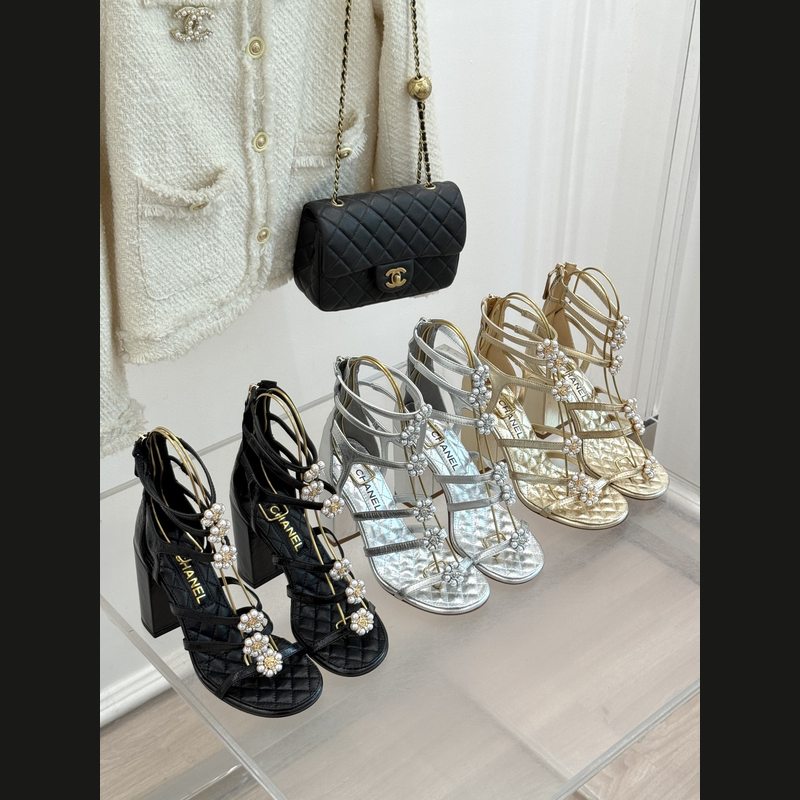
![Chanel Casual Shoes [20 styles] 1](/media/products/PROD_7779141400_1.webp)
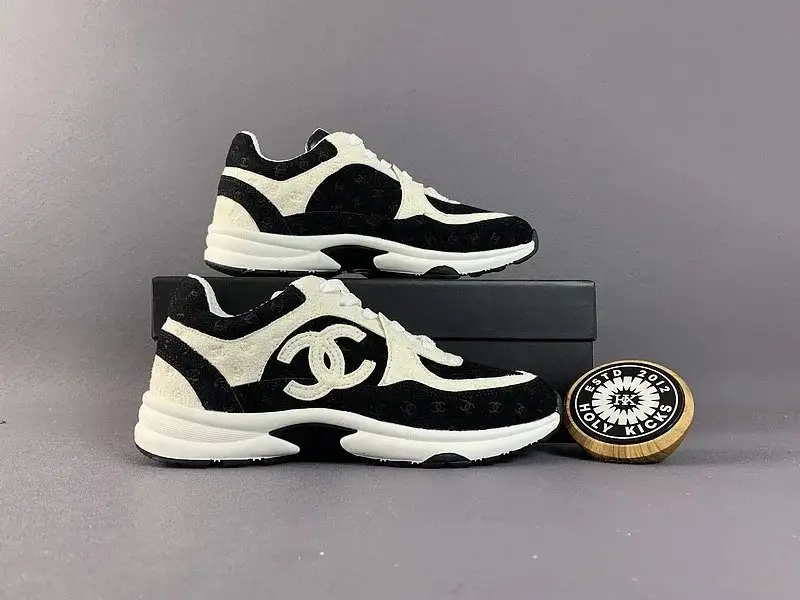
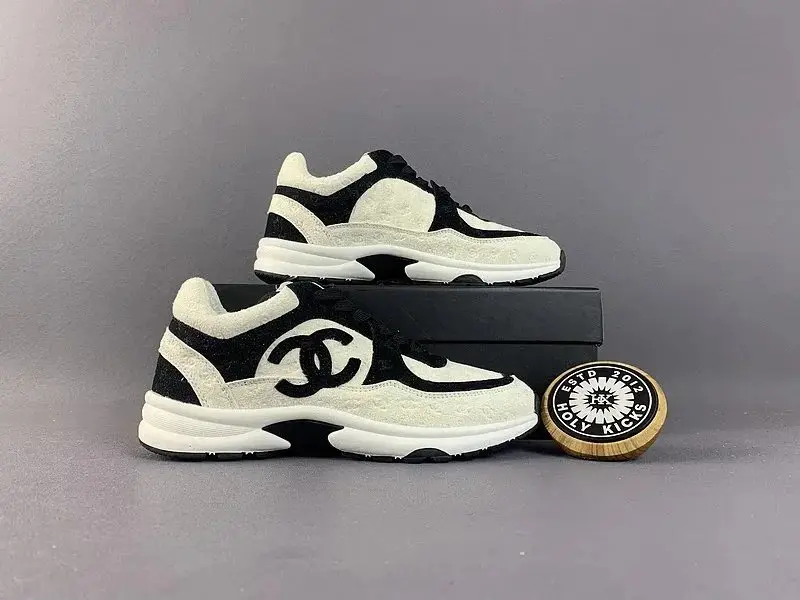
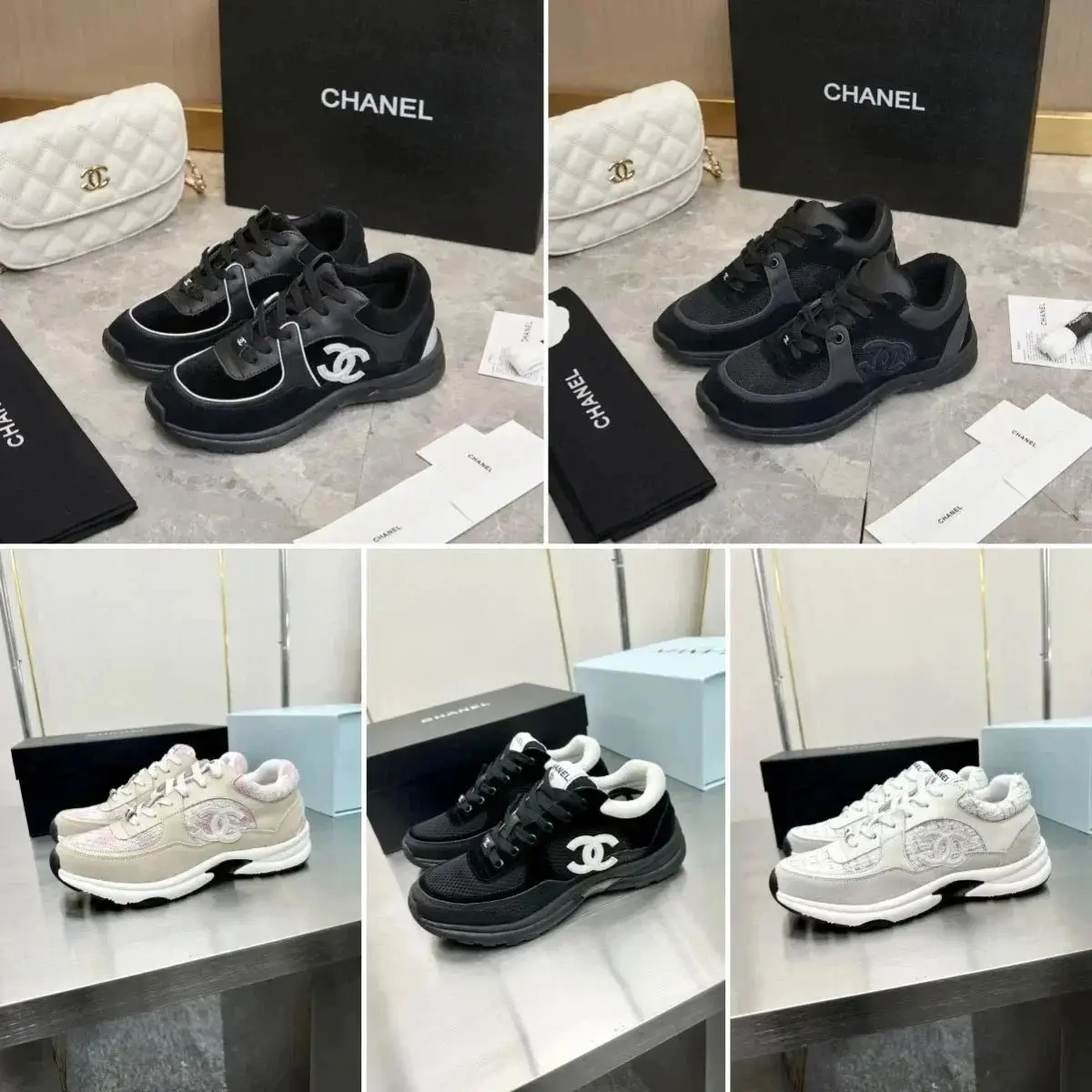

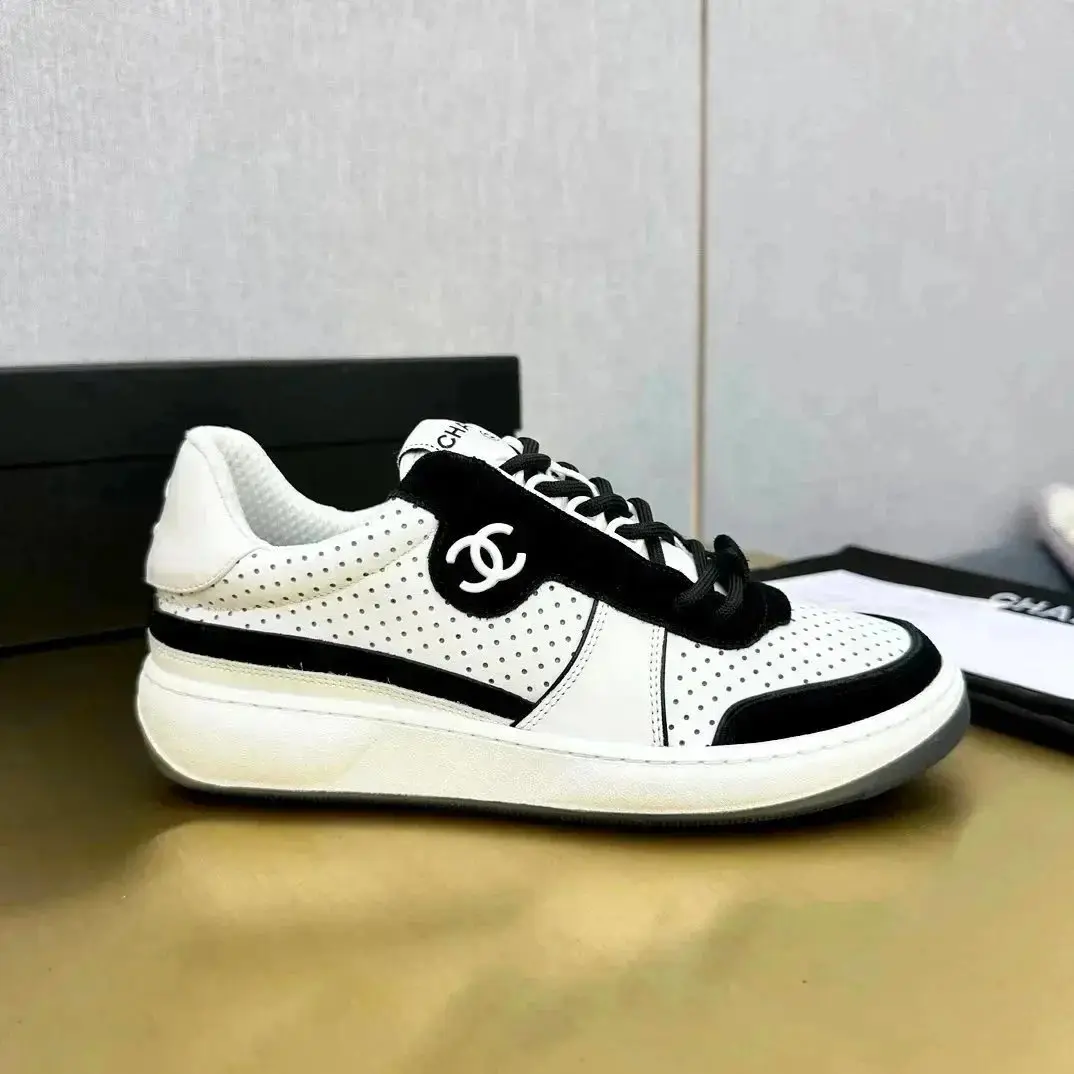
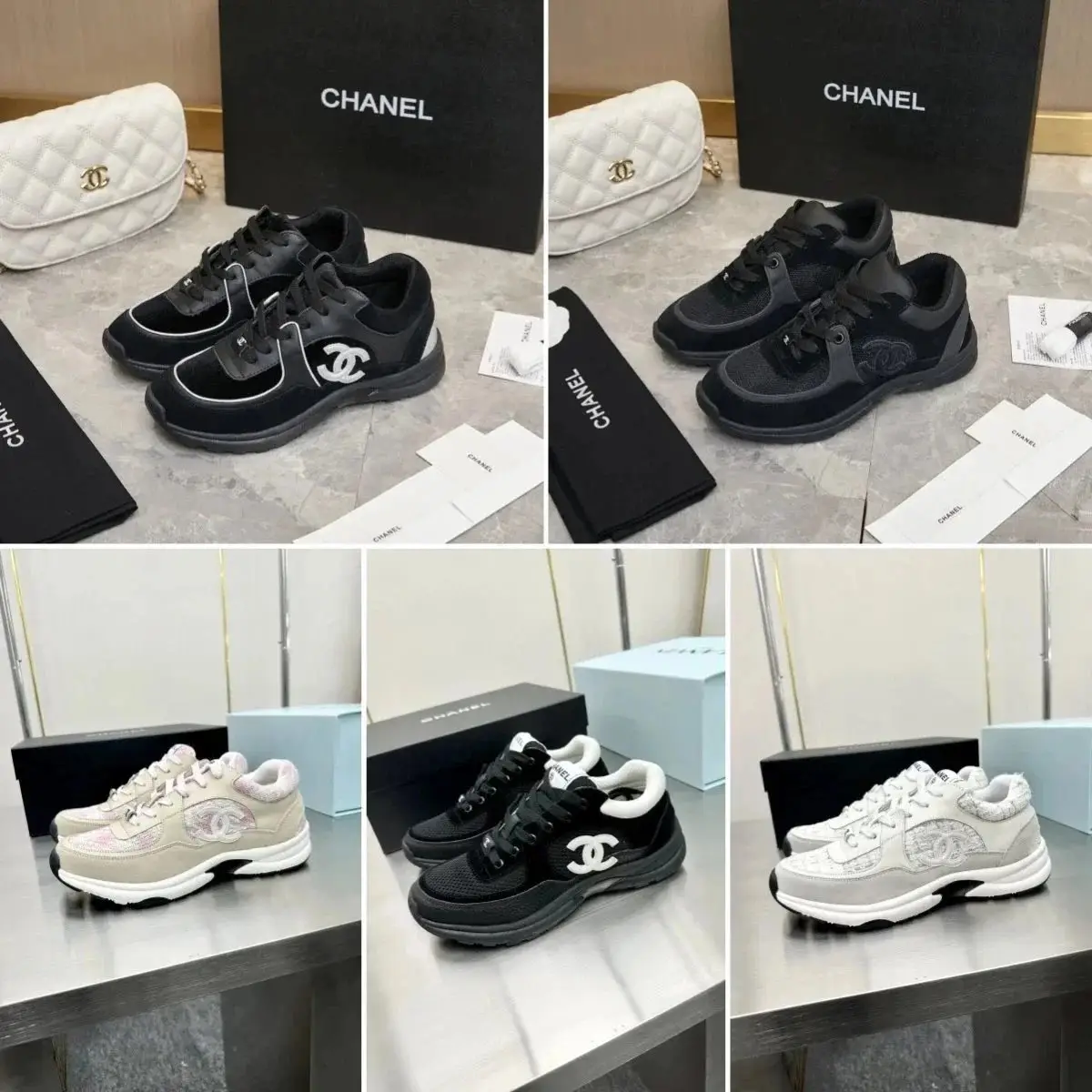
"The April 2026 Chanel slingback batch is the closest the rep market has come to a clean two-tone cap-toe in five years. The seam between beige body and black toe-cap sits flat, the CC heel hardware has the right warm-gold tone, and the lambskin grain is reading correctly under macro inspection. Top-tier sits at $58–$78. [TEAM_FILL: this month's actual cop rate / repeat-buyer % from internal data]"
Chanel is the third-most-searched luxury rep shoe brand on our catalog, trailing Hermès and Louis Vuitton. The bulk of those enquiries are for one silhouette: the two-tone slingback. Beige body with black cap-toe, 40mm heel, CC interlocking-logo hardware on the heel. After that, in descending order: the matching two-tone ballet flat, the espadrille (summer-only spike), the quilted boot, then a long tail of every other Chanel footwear silhouette combined.
The honest read on the Chanel rep market is that it's smaller and more specialised than LV's. Where LV reps come out of the same Putian production lines that make AAA Air Force 1s, Chanel reps come out of a smaller cluster of Guangzhou small-batch workshops that specialise in dressy women's footwear. Production runs are smaller. Lead times are longer. Quality variance between Top and Premium tier is wider, because the technical bar — bi-material cap-toe construction — is genuinely harder to clear than a Monogram print or an H buckle.
If you're reading this guide, you've probably looked at the retail slingback price ($1,150–$1,450 in 2026) and decided that paying that for a 40mm heeled court shoe with a strap of elastic across the back doesn't pencil. The construction is two pieces of leather stitched together with a heel block. The maison has spent decades convincing buyers that it's worth the price, and for collectors of the Chanel brand legacy it probably is. For the rest, the rep market closed the gap around 2023.
What this guide covers: why the cap-toe is the single hardest construction problem in the women's footwear rep market, which Chanel silhouettes are actually worth buying in 2026, how to read the heel hardware to spot a Top-tier batch, the heel-slip problem on slingbacks (and how to avoid it), and how to navigate the small but specialised Chanel rep workshop ecosystem. Same operator perspective as the rest of the catalog — we run a Yupoo album and ship DHL Express out of Guangzhou.
Independent perspective: rep-shoes.com is not affiliated with Chanel S.A.S. We document the rep market for buyers who want accurate information before ordering. All trademarks belong to their respective owners.
Browse the Chanel rep catalog
Live Yupoo album — slingbacks, ballet flats, espadrilles, quilted boots, sizes 35–41.
From Coco to Matthieu — Chanel's Footwear Lineage
Chanel was founded in 1910 by Gabrielle "Coco" Chanel as a Parisian millinery and tailoring house. The footwear category appeared piecemeal across the early decades — small leather goods, occasional shoe pieces — but the silhouette that defines Chanel rep buying today wasn't introduced until 1957. That year, Coco Chanel personally designed the two-tone slingback as a corrective garment: she wanted a shoe that elongated the foot visually (the beige body matching skin tone) while shortening the appearance of the toe (the black cap-toe creating a visual stop point). The two-tone wasn't decoration. It was optical engineering applied to a court shoe.
That 1957 silhouette is, with very minor refinements, the same shoe you can buy in 2026. Heel height shifted slightly across decades (the original was 35mm; current is 40mm). Materials expanded — from the original lambskin to patent, suede, denim, tweed, sequins. The CC interlocking logo on the heel is a later addition, formalised under Karl Lagerfeld in the early 1980s. But the two-tone cap-toe construction itself has been stable for nearly 70 years. That stability is part of why the rep market has been able to perfect it: workshops have been iterating on essentially the same construction for decades.
Karl Lagerfeld led Chanel as creative director from 1983 to 2019, and the Lagerfeld era is when Chanel footwear expanded most aggressively. The CC sneaker, the espadrille, the quilted boot, the tweed pump — most of the modern Chanel footwear catalog was either introduced or popularised under Lagerfeld. Virginie Viard, his long-time deputy, succeeded him from 2019 through early 2024. Matthieu Blayer, formerly of Bottega Veneta, took over as artistic director of women's fashion in 2024, and the early Blazer-era collections have leaned into refining and re-issuing the historical silhouettes rather than introducing new footwear icons. For rep buyers, this is good news — stability of design means stability of production reference.
One detail that gets lost: Chanel does not own a footwear factory. Retail Chanel shoes are made under contract by Italian small-batch shoemaking partners, predominantly in Tuscany and the Marche region. The production volumes are smaller than people assume — a single colourway in a single size might run only a few hundred pairs per season. This matters for the rep market because the rep workshops are working from limited reference material; iteration on a colourway can take a season or two before the rep batch matches retail consistently. [TEAM_FILL: insert when our Top-tier supplier first delivered the corrected lambskin grain on the current slingback batch]
Cap-Toe Construction — The Single Hardest Problem in Chanel Rep Manufacturing
This is the technical problem that defines the Chanel rep market the way Monogram canvas defines LV and H hardware defines Hermès. The cap-toe is two pieces of differently coloured leather joined at the toe of the shoe with a single visible seam. For the join to look right at retail standard, three independent things have to align:
- Leather thickness must match between the two colours. If the beige body leather is even half a millimetre thicker than the black cap-toe leather, the seam sits raised — visible from a metre away. Top-tier workshops source both colour leathers from the same tannery, same hide thickness, same finishing batch. Premium tier mixes sources, and the thickness mismatch shows up.
- Dye depth has to be uniform on both pieces. Beige is not just one colour; there's a specific Chanel beige with warm pink undertones, and the black has to be a true neutral black (not a blue-black or warm-black). If either dye penetrates the leather unevenly, the seam will show colour bleed at the join under wear. Top-tier batches use solvent-based aniline dyes through-coloured, same as retail; lower tiers use surface-coloured leather that wears through.
- Stitch tension must be uniform across the curve. The cap-toe seam follows a curve around the toe-tip of the shoe. If stitch tension drops at the curve apex, the seam puckers; if it tightens, the leather distorts. A skilled stitcher can run this seam in about three minutes. A less-skilled one will pucker it in thirty seconds. The difference is visible under raking light.
Most rep workshops nail two out of three. The hardest combination is leather-thickness-match + uniform-stitch-tension; a workshop that gets the first usually has the budget for the second. Cheaper workshops compensate with surface tricks — pressing the seam flat after stitching, painting over slight colour variation — but those tricks fail under macro inspection or after the first 20–30 wears.
The April 2026 Top-tier batch we're running clears all three. The seam sits flat at production; the colour holds at the join after 60+ test wears (we run an internal wear-test cycle on every new batch); the stitch tension holds across the curve. [TEAM_FILL: insert our specific factory designation / batch code for transparency, and any updates from supplier on technique changes]
Below the cap-toe, the secondary technical problem is the heel and CC hardware. The slingback heel is a 40mm covered heel with the CC interlocking logo at the back of the heel base. The CC should be cast brass, not stamped — meaning metal depth, sharp outer bevels, soft inner radii. Stamped CC has flat profile and uniformly sharp edges; that's the giveaway from across a dinner table. Top-tier batches use cast hardware now; the gap closed in mid-2024.
Worth flagging on leather sourcing specifically: the workshops producing Top-tier Chanel reps are sourcing lambskin from the same upstream Italian tanneries that supply mid-market European luxury houses — not the same tanneries Chanel itself uses (those are tightly controlled, exclusive supply contracts), but adjacent quality. The supply chain runs through wholesalers in Hong Kong and Shanghai who import European leather in bulk. This is why Top-tier Chanel reps cost $20–$30 more than Premium-tier: the leather alone is meaningfully more expensive at the raw material stage. If you've ever wondered why a "Top-tier" rep is genuinely better than a "Premium-tier" rep instead of being a marketing tier, this is the structural reason. Different leather, different price, different durability. [TEAM_FILL: insert which European tannery our current supplier sources from for transparency, where contractually permitted to share]
The Current Chanel Rep Landscape — Smaller, More Specialised
Chanel reps come out of a noticeably smaller workshop ecosystem than LV. Where LV draws on the entire Putian sneaker-rep complex, Chanel relies on perhaps a dozen Guangzhou-area small-batch workshops with specific expertise in dressy women's footwear and bi-material leather construction. The same workshops often produce the rep equivalents of Dior, Jimmy Choo, and certain Manolo Blahnik silhouettes — which means quality reputations transfer across these brands, but also means production capacity is shared and lead times can stretch when one brand's demand spikes.
| Tier | Cap-Toe Seam | CC Hardware | Pass Rate | Price |
|---|---|---|---|---|
| Top (PK / OG) | Flat, matched, even | Cast brass, warm | 88–93% | $68–$78 |
| Premium (H12 / GP) | Slightly raised | Cast zinc, cooler | 80–86% | $48–$62 |
| Standard | Visibly puckered | Stamped, dull | 70–78% | $32–$48 |
| Risky / blacklist | Painted, not stitched | Plastic-coated | below 70% | below $32 |
Pass rates derived from industry-standard QC reporting across rep-buying-agent platforms. Tier names follow community convention. [TEAM_FILL: insert our actual order distribution % across these tiers based on last 90 days]
The gap between Top and Premium tier is wider on Chanel than on most other luxury reps, specifically because the cap-toe is unforgiving. A Premium-tier LV Trainer with slightly off Monogram print can still pass at 90% of social distance. A Premium-tier Chanel slingback with a slightly raised cap-toe seam fails at 70% — anyone close enough to see your shoe will see the seam. For Chanel specifically, the recommendation is straightforward: pay for Top tier or skip the brand entirely.
Stock dynamics: the Chanel workshop ecosystem moves slower than LV's. Restocks happen on roughly 3–5 week cycles per silhouette, and individual colourways can be out of stock for 2–3 months between runs. [TEAM_FILL: typical restock cadence in days for top-tier Chanel slingback based on supplier behaviour]. If you see your size in your colourway, commit fast. The wait for the next batch is genuine.
Four Chanel Reps Worth Buying in 2026 — By Use Case
Different framework here than Hermès or LV. Chanel buyers are largely shopping by occasion rather than by silhouette aesthetic, so picks are organised by use case: office, dinner, summer, winter.
Office Pick · Beige/Black Slingback in Lambskin, 40mm Heel
The two-tone slingback in lambskin is the office-appropriate Chanel rep. Smart-casual ground floor through corporate-formal — works in nearly every professional context that allows visible women's footwear. The 40mm heel is high enough to read as dressed but low enough for full-day wear without foot fatigue. Sizes 35–41 in Top-tier. Rep price $68–$78. Retail $1,250.
Why this is the safe pick: the beige/black combination is the original 1957 colourway and the most-produced. Every workshop iterates on this colourway first; the QC reference material is deepest. Pairs with tailored trousers, midi skirts, sheath dresses, business-casual blouses. Avoid full-length trousers that obscure the heel — the slingback's silhouette wants to be seen. About 45% of our Chanel orders go through this configuration. [TEAM_FILL: our Q1 2026 cop rate for this exact configuration]
Dinner Pick · Black Patent Slingback with Gold CC
All-black patent leather slingback with the gold CC heel hardware visible against the patent shine — the cocktail and dinner version of the silhouette. Patent leather is technically easier to rep than lambskin (the surface coating hides micro-flaws in the underlying leather), so even Premium-tier batches do an okay job here, though Top-tier still wins on hardware tone and seam at the cap-toe. Rep price $62–$82.
Pairing logic: black patent slingback with anything cocktail-register — slip dresses, midi cocktail dresses, wide-leg evening trousers, certain suits. Reads as polished without veering into formal-evening territory. The CC hardware is the only metallic accent in the outfit, so it does visual work. Reserve this pair for evenings; patent doesn't love daylight wear over the long term, and the surface scuffs from concrete pavement faster than lambskin.
Summer Pick · CC-Logo Espadrille in Beige Canvas
The CC espadrille is Chanel's casual summer silhouette — flat or low-wedge, jute-rope sole, canvas or denim upper, small CC logo at the front. Different rep workshop universe from the slingback (espadrille construction is its own specialty), and quality is more consistent here at lower prices because the bi-material cap-toe problem doesn't apply. Top-tier $42–$58. Retail $850.
What buyers underestimate: the espadrille rope sole is a genuine technical detail. Retail Chanel uses jute rope hand-wrapped and cement-bonded to the upper. Premium-tier reps use synthetic jute substitutes that don't quite match the texture and wear poorly in wet conditions. Top-tier uses real jute. If you're going to wear espadrilles in any setting where the sole gets stress (beach, cobblestones, light rain), pay for Top-tier; the Premium will fall apart inside a season.
Winter Pick · Black Quilted Boot, Mid-Calf, Stretch Upper
The Chanel quilted boot — black leather quilted with the Chanel diamond pattern, mid-calf height, stretch fabric panel up the back of the calf — is the winter pick that doesn't get enough attention. Less photographed than the slingback but more wearable in actual weather. Quilting is a technical detail that rep workshops handle well (it's the same diamond-quilt pattern used on Chanel bag flaps, which is the most-rep'd Chanel category overall). Top-tier $85–$110. Retail $1,650.
The stretch back-panel construction is what separates a real Chanel boot from a generic quilted boot. The fabric panel allows the boot to slip onto the calf without a side zipper, while still hugging the leg. Rep batches handle this correctly at Top-tier; below that the back-panel material isn't truly elastic and the boot is harder to put on. Pair with skinny jeans tucked in, midi skirts, or wide-leg trousers cuffed to expose the boot top. Fits the winter quiet-luxury register that The Row reps and Loro Piana reps also occupy.
QC Photos for Chanel — What's Different from Other Brands
Chanel QC needs to interrogate the cap-toe seam first, the CC hardware second, and the leather thickness/colour match third. Standard QC photo set we run on every Chanel order:
- Cap-toe seam macro from above and at raking light. The single most important photo. Demand close-ups of the seam where beige meets black at the toe, taken from directly above and from the side under raking light. The seam should sit flat (not raised), the stitch should be uniform across the curve, and there should be no colour bleed from one leather into the other at the join. This one photo separates Top-tier from everything else.
- CC heel hardware close-up. The interlocking CC at the back of the heel base should be cast (depth, sharp outer bevels, soft inner radii), warm gold tone (not cool yellow), uniformly finished. Side-by-side with a retail reference photo gives the cleanest verification.
- Leather grain at the body. The beige body of the slingback is lambskin or kidskin. Demand a macro showing the natural grain — small irregular pebbling, not a uniform stamped surface. Stamped or embossed grain is a Premium-tier marker; even Top-tier should have visible natural variation.
- Insole stamp and sock liner. The inside of the shoe carries a Chanel-printed sock liner with the brand mark, and a leather insole with a heel-area stamp. Stamp depth should be even, brand typography correct, alignment centred. Off-typography is a strong below-Premium signal.
- Slingback elastic strap quality. The elastic ankle strap should be a covered fabric elastic, not exposed rubber. Strap colour should match the body leather. The metal strap-end clips (where the elastic meets the shoe upper at the heel) should be the same warm-gold finish as the CC.
- Sole and heel construction. Leather sole with a small rubber heel-tap insert at the back of the heel for grip. The heel should be properly attached (no glue lines visible), the heel-tap insert flush with the heel base. Demand a photo of the underside.
- Box and dust bag. Chanel's beige box with black ribbon and printed cream dust bag. [TEAM_FILL: our packaging upgrade fee and current included items]. Decent rep boxes are about 80% of retail visual quality. Shoes themselves are what matter.
Common failure modes we reject at QC and replace before shipment: [TEAM_FILL: list our top 3 Chanel-specific QC rejection reasons from the past 90 days]. We hold pairs for re-pick rather than ship a slingback where the cap-toe seam is even slightly raised — that flaw makes the pair recognisable as rep from a metre away.
Retail price April 2026. Rep prices from our catalog. Standard tier shown for completeness — we don't recommend below Premium for Chanel.
Sizing — The Slingback Heel-Slip Problem
The slingback runs true to EU for narrow to medium feet. Wide feet should size up half EU. Where Chanel sizing differs from most luxury reps is the heel-slip issue, which is structurally inherent to the slingback design rather than a sizing error. Here's what's happening and how to handle it.
A slingback has no fixed heel cup — the back of the foot is held in place by an elastic ankle strap. When you walk, the elastic stretches slightly with each step, and on the upstroke the heel can slip out of the strap entirely. This happens on retail Chanel slingbacks too; it's a slingback design problem, not a rep flaw. The elastic strap on a Top-tier rep is tensioned correctly out of the box, but it will stretch with wear — by month 6 you may need to take the strap to a cobbler and have a small section removed to retighten it. Cost: about $15. This is normal slingback maintenance.
Sizing solution: order half a size down from your normal EU on slingback specifically. If you're a true EU 38 in court shoes, order 37.5 in slingback. The half-size shift adds slight pressure across the foot that compensates for elastic stretch over time. This is the recommendation we give every slingback buyer; it's reduced our heel-slip return rate significantly. [TEAM_FILL: our specific slingback exchange rate before vs after recommending the half-size adjustment]
Ballet flats run truer to size — order your normal EU. Espadrilles run slightly large (size down half EU). Boots run true to size. For US/UK conversions, run them through the size converter. US Women 7 = EU 37–37.5; on a slingback that means order 37 to 37.5 depending on heel-slip tolerance.
One sizing nuance worth flagging: Top-tier and Premium-tier batches use slightly different lasts. The Top-tier last follows retail Chanel within about 1mm at toe and heel; the Premium last is built locally and runs slightly narrower at the toe-box. If you've previously sized down on a Premium pair and are upgrading to Top-tier, your old size may now feel slightly tight — go up half an EU to compensate. [TEAM_FILL: confirm typical last difference between our Top and Premium suppliers based on internal QA records]
Care & Longevity — Lambskin, Patent, Tweed
Different materials in the Chanel catalog need different care, and the failure modes differ. The mistake we see most often is buyers treating lambskin slingbacks like business shoes — wearing them daily, walking long distances, ignoring weather. Lambskin is genuinely soft leather; it's a dressy-occasion material, not a daily-driver one. This applies to retail and rep equally.
Lambskin slingbacks. Rotate, don't daily-wear. A pair worn 1–2x per week with rest days lasts 2–3x longer than the same pair worn daily. Apply a quality leather conditioner (Saphir Renovateur or Leather Honey) once per quarter; the lambskin needs the moisture to stay supple. Don't waterproof-spray lambskin slingbacks — fluoropolymer sprays change the leather's hand-feel and slightly dull the natural grain. Better to avoid wet-weather wear entirely.
Patent leather slingbacks. Lower maintenance, higher resistance to surface damage. Wipe with a damp microfibre cloth after wear; the patent surface is essentially sealed. Two failure modes specific to patent: micro-cracking on the toe-flex point (unavoidable over time, both retail and rep) and surface scuffs from concrete pavement (cosmetically visible, hard to remove). Don't wear patent on cobblestones if avoidable.
Tweed-upper styles. The shortest-lived material in the Chanel catalog. Tweed pulls and snags easily; one catch on a metal chair or a bag handle can damage the upper visibly. Reserve tweed for sit-down occasions; don't wear them through crowds. Cleaning is essentially impossible without sending to a specialist; treat them as semi-disposable accessories. Top-tier tweed reps use proper woven tweed; Premium-tier reps use printed tweed-look fabric that doesn't wear naturally.
Espadrilles. Jute-rope sole is the wear point. Don't wear in rain (jute absorbs water and the cement bond can release). Don't wear on long walks on rough pavement (rope wears down at the heel asymmetrically). Top-tier rope soles last 2 summers of typical wear; Premium soles last about 1 summer.
Chanel vs Hermès vs The Row — The Quiet Luxury Trio
The three brands that dominate the quiet-luxury women's footwear conversation in 2026 are Chanel, Hermès, and The Row. Each occupies a different register within the broader category:
Chanel reads as recognisable luxury — the CC hardware and the two-tone cap-toe carry brand identity loudly enough to be visible at social distance. Pair with traditional bourgeois wardrobes, smart-casual through cocktail. Chanel is the brand to wear when you want the Chanel cue read.
Hermès (specifically the Oran sandal) reads as knowing luxury — the H buckle is identifiable to people who already know it, and invisible to people who don't. Pair with summer linen and chambray, beach-club through brunch. Hermès reps guide. Hermès is the brand for buyers who don't need the brand cue read out loud.
The Row reads as anti-cue luxury — no logo, no hardware, just construction and material quality. Pair with all-tonal wardrobes and minimalist tailoring. The Row reps guide. The Row is for buyers who actively don't want any brand cue at all.
Most quiet-luxury rep collectors end up with one piece from each. Chanel slingback for office, Hermès Oran for summer weekends, The Row Bare or loafer for the days that need the most-stripped register. The three don't compete — they fill different registers in the same wardrobe.
How to Order — End-to-End
Three steps. Browse the Yupoo catalog, screenshot the colourway and silhouette you want, and message it on WhatsApp with your EU size (remember the half-size-down recommendation on slingback). We confirm stock within 30 minutes during business hours (Guangzhou time GMT+8). QC photos go out within 2–3 days for Chanel — slightly slower than other brands because of the smaller workshop ecosystem and the additional cap-toe inspection step. Once you approve QC, the pair ships DHL Express. From China to most of the EU and US, that's 5–9 business days. Italy and France land in the slower 7–11 day band; UK and Germany are typically the fastest in Europe; US is consistent across most states.
If you'd rather skip the manual screenshot step, the order builder tool generates a complete order message — silhouette, colourway, size, shipping address — that pastes straight into WhatsApp.
Ready to order Chanel reps?
Screenshot your pair, send it here. QC photos before shipment — always.
Frequently Asked Questions
April 2026 Update — What's Live This Month
Top-tier slingback restocked April 22 across sizes 35–41 in the classic beige/black lambskin. Black patent slingback restocked partial — sizes 36–40 only. Tweed slingback colourways are running thin; the cream/black tweed sold through within 8 days of the previous restock and we're sourcing the next run. Espadrille season just opened; both beige canvas and black canvas are in stock. Quilted boot has 2-week lead time on most sizes.
What changed since the March batch: lambskin grain on the new slingback run is reading slightly more refined under macro inspection — the workshop appears to have moved to a slightly higher-grade tannery. CC hardware tone unchanged. [TEAM_FILL: this month's actual unit cost movement / supplier comments / any new colourways added since last update]
This page updates monthly. Last revision: April 2026. Next scheduled revision: May 2026 — batch refresh, new colourway availability, restock notes.
Related Brands & Guides
If you're shopping Chanel reps, the natural adjacent reads are the Hermès reps guide (the third quiet-luxury anchor in the women's footwear conversation, summer-weighted), the The Row reps guide (anti-cue luxury, the third leg of the quiet-luxury trio), and the Dior reps guide (similar bi-material construction problems on certain Dior silhouettes; same workshop ecosystem). For heeled alternatives in different registers, look at Jimmy Choo reps, Manolo Blahnik reps, or Louboutin reps. See all luxury rep shoes or browse all 47 brands.