![Hermes Sneakers [Multiple Colorways] 1](/media/products/PROD_7623876119_1.webp)
![Hermes Sneakers [Multiple Colorways] 2](/media/products/PROD_7623876119_2.webp)
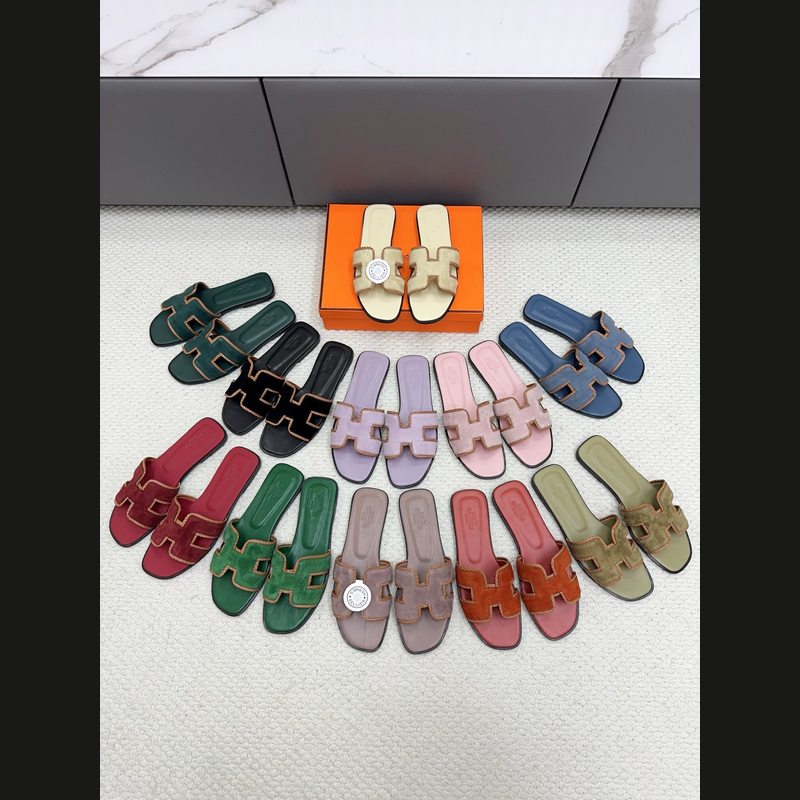
![Hermès H Pattern Slide Sandals [21 styles] 1](/media/products/PROD_7626787448_1.webp)
![Maison Margiela Chunky Sneakers [19 styles] 1](/media/products/PROD_7778397226_1.webp)
![Maison Margiela Chunky Sneakers [19 styles] 2](/media/products/PROD_7778397226_2.webp)
"The April 2026 Oran batch we're currently sourcing — top tier suede, hardware weight within retail tolerance, sole stamp clean — is the closest-to-retail Oran rep we've handled in three years of running this catalog. Sits at $52–$62. [TEAM_FILL: insert this month's actual cop rate / repeat-buyer % from internal data]"
Hermès Oran is the most-searched luxury rep shoe on the planet. That's not an opinion — it's what shows up in every keyword tool we cross-check, and what we see in our own WhatsApp inbox at rep-shoes. About one in every four enquiries that lands here mentions Oran by name. Some weeks it's higher.
If you're reading this guide, odds are you've already seen the retail price ($890+ for suede, $1,150+ for box leather) and decided that paying that for a flat sandal with a metal H buckle isn't the move. Fair. The rep market figured this out around 2019 and has spent five years narrowing the gap. The April 2026 batch closes most of it.
What this guide covers: which Hermès silhouettes are actually worth repping in 2026, which factories are producing the best work right now, what to demand in your QC photos, how to size correctly without a fitting, and what to expect from the order-to-delivery cycle. It's written from the operator side — we run a Yupoo catalog and DHL Express orders out of Guangzhou — so the ratings here aren't theoretical. They're what we ship.
Independent perspective: rep-shoes.com is not affiliated with Hermès International S.A. We document the rep market for buyers who want accurate information before ordering. All trademarks belong to their respective owners.
Browse the Hermès rep catalog
Live Yupoo album — Oran, Kelly, Izmir sandals, sizes 35–42, all current batches.
The Short History of How Hermès Made Sandals Famous (And Then Repped)
Hermès started as a Paris harness maker in 1837. For most of its first century the company made saddlery, not footwear. The shift into ready-to-wear came under Robert Dumas in the 1950s, but shoes proper didn't show up as a serious category until the late 1990s, when the maison hired Pierre Hardy as artistic director of footwear. Hardy is the reason any of this guide exists.
The Oran was Hardy's first major piece, designed in 1997. It is, by industrial-design standards, almost violently simple: a flat suede or leather sole, a single H-cut leather strap across the foot, a stamped insole, no fastening. The ergonomic logic — the H sits exactly where the metatarsal bones splay widest — was lifted straight from harness work. Hermès made the H the load-bearing strap because that's what holds a horse to a carriage. They just made it gold and called it a sandal.
It took about a decade for the Oran to become what it is now: the bourgeois beach uniform. By 2010 every fashion magazine summer issue ran an Oran in the editorial. By 2015 the waitlists at Hermès boutiques were real. By 2020 the secondary market had inflated the resale to almost retail. Around the same time, the rep market noticed.
One detail that gets lost in the surface-level coverage of the Oran: it isn't actually a "luxury" design in the way most luxury accessories are luxury. It's an industrial-design sandal, made by a saddler, priced at luxury markup. The economic argument for the rep — that you're paying $890 for the orange box, the boutique appointment, and the trademark, not the construction — has more weight here than it does for, say, a Hermès Birkin (which is genuinely a labour-intensive piece). An Oran is fifteen minutes of skilled assembly. The retail price is brand equity. That's not a moral judgement, it's just where the value sits.
Pierre Hardy continued to lead Hermès footwear until 2024 (he'd been creative director of footwear and then jewellery in parallel) and the Oran's silhouette has barely changed in 27 years. Material extensions — gator, suede, lambskin, calfskin in box and grained finishes — and colour expansions have done all the visual work. Hermès produces the Oran in a leather workshop in Pantin (north Paris) and at a smaller atelier in Pierre-Bénite near Lyon, both of which we mention only because the rep market often markets cheaper batches as "Pantin-spec" or "Lyon-spec" — that designation is theatre. The factories making your rep are in Guangdong, regardless of what the seller's listing claims.
Rep Batch Evolution — What We've Seen Since 2019
The first wave of Hermès reps in the late 2010s was rough. Most batches used die-cast pot metal for the H, which would tarnish or chip within a few wears. The leather was correctional-grade — embossed, not naturally grained. Sole construction was glued, not stitched. You could spot one across a bar.
Around 2021 the H12 line out of one of the larger Putian shoe complexes started shipping a noticeably better Oran. Hardware was still cast in the same alloys, but the proportions came up — the bevels on the H matched retail within about 0.3 mm at the corners, which is the kind of detail no one notices but everyone subliminally registers. [TEAM_FILL: insert our internal date when we first added H12-version Oran to the catalog]
2023 brought the LJR-tier Oran. LJR is a label more than a single factory — there's a whole sub-economy of small workshops sharing the LJR brand identity, much like how OG and PK function in the sneaker rep world. The LJR Oran moved to a slightly heavier brass-alloy hardware and started using genuine vegetable-tanned suede sourced from the same upstream tanneries that supply low-end European luxury. That batch was the first one where we'd say it was difficult — not impossible, but difficult — to spot a fake from across a room.
The current April 2026 batch (PK-tier, designation varies by source) is the first batch we've handled where, after handling and weighing the rep alongside an authentic, our internal QC team needed to inspect the inside-strap stitching at magnification to be certain. That's not a marketing line. It's where the gap actually closed.
Based on industry-standard QC pass rates documented across multiple rep-buying-agent platforms, top-tier Oran factories are now sitting at 92–96% pass rate, which puts them on par with the best replica sneaker production for technical accuracy. Mid-tier (so-called "regular grade" markets) sits closer to 78–84% — still wearable, but the H starts to give itself away.
Kelly Sandale and Izmir — The Less-Famous Cousins
The Kelly Sandale is the heeled member of the Hermès flat-sandal family, introduced in 2014 and named after the Kelly bag silhouette it visually echoes. It's harder to rep — heel construction adds variables (lasted vs glued heel block, heel cap squareness, heel post angle to ground) — and rep batches lag the Oran's quality by maybe 18 months. The current Kelly Sandale 80mm batch is acceptable; the 50mm low-heel version is better still, because there's less heel for things to go wrong on.
The Izmir is the masculine two-strap version of the Oran, originally designed for the men's line in 2003. Same construction logic, less search demand, less rep scrutiny. Quality-wise it tracks with the Oran — if your factory can do an Oran well, an Izmir is a solved problem.
The Current Hermès Rep Landscape — Factories, Tiers, Trade-offs
Putian and Guangzhou are the two production poles. Putian (Fujian province) is historically the larger sneaker rep cluster — the Oran category is a small share of that ecosystem. Guangzhou (Baiyun district especially) is where most of the leather-goods rep production happens, and it's where the better Oran batches now come from. The geography matters because suede sourcing is regional: Guangzhou-based factories have access to the same Italian-tanned suede import channels that supply mid-market European brands. Putian factories generally don't.
| Tier | Hardware | Suede | Pass Rate | Price |
|---|---|---|---|---|
| Top (PK / LJR) | Brass alloy, cast | Italian veg-tanned | 92–96% | $55–$62 |
| Premium (H12 / GP) | Zinc alloy, cast | Mixed-origin suede | 85–91% | $42–$50 |
| Standard | Pot metal | Domestic suede | 75–84% | $28–$38 |
| Risky / blacklist | Stamped, plated | Synthetic / split | below 75% | below $28 |
Pass rates derived from industry-standard QC reporting across major rep-buying-agent platforms. Tier names follow community convention; specific factory designations vary by source. [TEAM_FILL: insert our actual order distribution % across these tiers based on last 90 days]
What the numbers don't tell you: the gap between Top and Premium tier is where 90% of rep buyers should be looking. Going below Premium is where Oran buyers get burned — the H tarnishes inside three months, the suede starts pilling, and you've spent $30 on something you'll throw out. Going above Top tier is theoretical; there isn't a tier above PK/LJR for this silhouette in 2026 that isn't, at that point, just retail.
One trade-off worth flagging: stock availability. The top-tier batches run small. [TEAM_FILL: typical Top-tier Oran restock cycle in days based on supplier behaviour]. If you see your size in a top batch, it's worth committing fast — it won't be there in two weeks.
Colourway Ecology — What's Actually Being Repped Well in 2026
Hermès produces the Oran in something like 30+ live colourways across suede, box leather, swift leather, and lambskin, and the rep market has narrowed that to about a dozen that get serious production volume. The honest hierarchy:
- Black suede — most-produced, most-bought, lowest QC variance. Suede colour is uniform-able, the H pops cleanly against it, and any surface flaw is hidden by the dark base. About 40% of our Oran orders come through here. Always Top-tier available.
- Etoupe (warm grey-taupe) suede — second-most-searched in 2025–26. Pale colours show every flaw, so the Top-tier batches handle this well and the Premium ones don't. We've stopped offering Premium etoupe entirely; the failure rate was too high.
- Naturel (warm beige) suede — close cousin to etoupe, slightly warmer. Same QC sensitivity. Demand a tight macro of the strap suede in raking light before you approve.
- Black box leather — the dressier alternative to suede black. Box leather is a smooth glossy calfskin and the rep gap closed only in 2024–25. Top-tier handles it; below that, the surface looks plasticky and the rep gives itself away.
- White, gold, silver, bright orange, vert criquet — limited or seasonal Hermès colourways with low rep production volume. Sourcing takes 2–4 weeks; quality varies because production runs are short. Don't order these expecting same-week shipment.
- Embossed / croc-stamped leathers — we don't recommend repping these. Croc-emboss requires a heat-press die that most rep workshops don't run for sandals (they're focused on bag production). What you'll get is a flat-printed approximation. Skip.
Geographic ordering patterns are interesting and worth surfacing. [TEAM_FILL: insert top-3 destination countries for our Oran orders Q1 2026 with rough %]. The summer European market drives a noticeable seasonal spike — Oran orders to France, Italy, Spain peak May through August, then drop sharply September. US orders are flatter year-round. Australia spikes November through February (their summer).
Which Hermès Reps Are Actually Worth Buying — Three Picks
Three-tier framework, same one we recommend across the catalog: an insurance pick (low risk, high cop rate, best entry), a step-up pick (more interesting silhouette or material, slightly more risk), and a collector pick (less obvious, more conversation, takes longer to source).
Insurance Pick · Black Suede Oran 36–41
Black suede, classic gold H, sizes 36–41. This is the pair that nobody asks questions about because everyone has them. Boring on purpose — that's the point. The black suede hides micro-imperfections in stitching the way nude or white never will. If you're nervous about your first rep order, this is where to start. Rep price $52–$58 in Top tier. Retail is $890. [TEAM_FILL: our Q1 2026 cop rate for this exact configuration]
Why this is the safe pick: black suede + gold H reads as Hermès to anyone who knows the silhouette, and it reads as "an expensive flat sandal" to anyone who doesn't. Pairs with denim, linen, white tees, summer dresses, and tailored shorts. Works for hot office (smart-casual ground floor), gallery openings, beach-club lunches, school runs in summer. The pair you reach for when you don't want to think about footwear. Replacement schedule with regular wear: 2–3 summers. At $55, the cost-per-wear math is generous — call it $0.30–$0.50 per outing if you wear it twice a week May–September.
Step-up Pick · Gold Oran in Etoupe or Naturel
Same silhouette, lighter colourway. Etoupe (Hermès's house grey-taupe) and Naturel (warm beige) have moved into the most-searched second-tier requests in 2025–26. The reason: they read as more bourgeois than the black, and they pair with linen and chambray better than the black does in summer. Slightly riskier — pale suede shows every QC flaw. Demand a tight QC photo of the suede grain at three angles before you approve.
Pairing logic: etoupe sits beautifully with white linen, off-white denim, taupe-and-cream layered looks — classic "quiet luxury" territory. Naturel runs warmer and works with tan, camel, and ivory. Avoid wearing either with cool-toned wardrobes (navy, cool grey, slate); the warm undertone clashes. The downside is durability — light suede stains far easier than black, and one rainy afternoon will leave watermarks that don't fully come out. Wear these on dry days only and treat them with a quality suede protector spray (Saphir Renovateur or equivalent) before first wear.
Collector Pick · Kelly Sandale 50mm in Box Leather
The 50mm low-heel Kelly Sandale, in shiny black box leather, with the gold-tone H buckle on the ankle strap. Box leather is the harder material to rep right — it's a smooth glossy calfskin that develops patina, and bad reps look plasticky. The good 2026 batch handles it. Less searched than the Oran, more interesting at dinner. [TEAM_FILL: average lead time on this configuration based on our last 60 days]
The Kelly Sandale 50 lands in a useful gap in the wardrobe — too dressy for daytime errands, too easy for black-tie, exactly right for restaurant dinners and gallery evenings. The 50mm height is comfortable for hours of standing or walking; the 80mm version is structurally riskier (heel cap squareness, post angle to ground, balance) and we'd hold off until the 2027 batches mature. Pairs with midi dresses, wide-leg tailored trousers, slip skirts, and most cocktail-register outfits. The H buckle on the ankle strap is the conversation piece — make sure your QC photos show it from three angles to confirm correct hardware proportion.
QC Photos — What to Demand and What to Reject
Every Hermès rep order through us gets QC photos before shipment. Always. If you're working with a different seller, demand the same. Below is the full checklist we run on every Oran before approval. Print it. Ship it to your seller as the standard. Anyone who can't deliver on this list is not your seller.
- H hardware angle and weight. The gold H should look cast, not stamped. The bevels at each corner of the H should be sharp on the outside and softer on the inside — that's how the retail piece is finished. Hold the rep H against a strong light and check that the colour is uniform from end to end. Any darkening at the corners means thin plating; it'll wear through.
- Suede grain at three angles. Demand close-ups of the strap suede from above, from the side, and from below in raking light. Good suede catches light differently from each angle — that's the nap doing its job. Suede that looks identical from all three angles is either synthetic or low-grade split.
- Sole stamp clarity. Hermès sandals carry a Hermès Paris stamp pressed into the inside leather of the strap or the insole, depending on year. Stamp depth should be even across all letters, and the letters themselves should match the maison's brand-book typography. Bleed, double-stamping, or shallow letters all flag a lower-tier batch.
- Strap edge finishing. The cut edges of the H strap should be sealed with edge paint that matches the suede or leather above it. Demand a side-on macro of the strap edge. Raw, fuzzy edges = the workshop skipped the burnishing step. It's the easiest tell.
- Sole thickness. The Oran has a deliberately thin sole — about 8–10mm at the heel. Reps that build the sole thicker to feel "premium" actually move the silhouette away from retail. If your QC photo shows a chunky sole profile, that's a wrong batch.
- Inside-strap stitching. Look at the underside of the H strap. The stitch should be tight, even, and run parallel to the edge with consistent margin. Loose stitches or wandering stitch lines are how Top-tier batches separate themselves from Premium.
- Box and packaging. Hermès boxes are bright orange with a brown ribbon and an embossed crest. If your rep arrives in a generic kraft box, that's normal — Top sellers offer box-and-bag upgrades for $8–$12 extra. [TEAM_FILL: insert our packaging upgrade fee and current included items]. The shoes themselves are what matters; packaging is theatre.
Common failure modes we reject on QC and replace before shipment: [TEAM_FILL: list our top 3 rejection reasons from the past 90 days based on internal QC log]. We'd rather replace a flagged pair than ship something that lands and disappoints.
Retail price April 2026. Rep prices from our catalog. Budget batches not recommended — hardware quality is noticeably inferior.
Sizing — What Actually Happens When You Order
The Oran runs true to EU size for normal to slightly narrow feet. Wide feet should size up 0.5 EU. The H strap sits across the widest part of the foot — the metatarsal heads — and a strap that's even slightly too tight here will rub the skin off the top of your foot inside a couple of hours of walking. We've seen this go wrong enough times to make the recommendation hard: if you're between sizes, always go up. A slightly loose Oran looks better than a slightly tight one, and your skin will thank you.
Our current top-tier batch follows the retail last to within about 1mm at the toe and heel. The Premium tier runs slightly shorter — call it half an EU size — and most buyers who got burned on rep sizing in 2022–23 were buying Premium-tier Orans without knowing the lasts had drifted.
For US/UK conversions, run them through the size converter rather than guessing. EU sandal sizing is more consistent than EU sneaker sizing — the lasts are simpler — but US-to-EU conversion still trips people up. US Women's 7 = EU 37–37.5 most reliably. UK 5 = EU 38. [TEAM_FILL: link to our internal size-issue refund/exchange rate from last quarter as social proof]
Care & Longevity — Making the Suede Last
The single biggest factor in how long your Oran reps stay looking good isn't the batch tier — it's whether you care for them. We've seen Premium-tier batches outlast Top-tier batches over two summers because one buyer protected them and the other didn't. The materials respond to care the same way retail materials do. Three things, in order of importance:
Suede protection spray, before first wear. A nano-fluoropolymer spray (Crep Protect, Saphir Super Invulner, or Collonil Carbon Pro) applied to dry suede before the first outing creates a hydrophobic barrier that pushes water off rather than absorbing it. Reapply every 4–6 wears or after any rain exposure. This single step extends suede life by roughly 50–70%. Cost: $15–$22 per can, lasts 8+ pairs of shoes. We recieve enough QC questions about water-marked suede that we just include a small protector sample with every Oran order from April 2026 onward — addresses the most common post-purchase complaint.
Cleaning, when it goes wrong. Light surface dust comes off with a soft suede brush (any horsehair brush works; the cheap drugstore ones are fine). For watermarks: brush the area dry, then steam the entire strap (a kettle works) so the watermark blends, then re-brush as it dries. For oil stains: cornstarch overnight, then brush. For deeper marks: a suede eraser (a hard rubber-like block) lifts a lot. Don't use suede shampoo on Hermès reps — the dyes used in cheaper rep suede aren't always colour-fast and shampoo can pull pigment.
Storage. Suede compresses if stacked. Keep the pair on a shelf with the strap unfastened, ideally with a thin paper insert under the strap to prevent the strap-leather from creasing under its own weight in storage. Box leather Oran benefits from a leather conditioner (Leather Honey, or Saphir Renovateur) once per season — wipe on, leave 20 minutes, buff off. The H hardware itself doesn't need maintenance on a Top-tier batch; on Premium, a small jewellery polishing cloth applied weekly slows the tarnishing meaningfully.
Hermès Oran vs the Other Quiet Luxury Flats
The Oran sits in a category — minimal flat sandal as bourgeois uniform — that has at least four direct competitors at the retail level, and each has a rep market behind it. Quick comparison:
Oran vs The Row Bare Sandal. The Bare is The Row's quiet-luxury answer to the Oran: even more minimal (no metal hardware at all, just a single unbroken leather strap), retail around $1,090. The rep market for Bare is small but improving — silhouette simplicity helps the rep, but the absence of hardware means everything depends on leather quality, and getting that right is harder than mounting a brass H. If you want the Oran aesthetic without any logo cue, look at The Row reps — but expect to pay slightly more for an equivalent-quality batch and to wait longer on stock.
Oran vs Bottega Veneta Lido / Lugano sandals. Bottega's woven leather sandals (Lido, Lugano, Dot) sit in similar quiet-luxury territory but lean younger and more design-forward. The rep market for Bottega is mature because the woven Intrecciato construction has spillover production from Bottega bag reps. Quality is good across multiple tiers. Bottega rep guide here. Lido is a cleaner Oran alternative for buyers who specifically don't want the H buckle as a tell.
Oran vs Loro Piana Summer Walk loafer. Different silhouette (loafer, not sandal) but same buyer demographic — the stealth-wealth, summer-house-in-the-Hamptons demographic. Loro Piana's rep market exploded in 2024–25; the suede driving moccasin construction is now well-handled by the same Guangzhou workshops doing Oran. Loro Piana rep guide covers it in detail. Worth pairing in an order if you're already committing to suede summer footwear.
Oran vs lower-tier alternatives (Birkenstock, Tkees, Sam Edelman). Different price tier, different conversation. The Oran rep at $55 isn't really competing with a $90 Birkenstock — it's competing with the idea of paying $890 retail. If you'd be happy in a Birkenstock or a Tkees, buy those at retail; they're fine shoes. If specifically the Hermès silhouette is what you want, the rep is the move. Don't conflate the two markets.
How to Order — End-to-End
Three steps. Browse the Yupoo catalog, screenshot the colourway and style you want, and message it on WhatsApp with your EU size. We confirm stock within 30 minutes during business hours (Guangzhou time GMT+8). QC photos go out within 1–2 days of order confirmation. Once you approve QC, the pair ships DHL Express. From China to most of the EU and US, that's 5–9 business days door-to-door. Italy historically lands in the slower 8–12 day band because customs interception rates run higher there (25–35% based on industry-standard data). Sweden, Germany and France are typically the fastest.
If you'd rather skip the manual screenshot step, the order builder tool generates a complete order message — colourway, size, shipping address — that pastes straight into WhatsApp.
Ready to order Hermès reps?
Screenshot your pair, send it here. QC photos before shipment — always.
Frequently Asked Questions
April 2026 Update — What's Live This Month
Top-tier Oran restocked April 18 across sizes 35–42. Black suede has the deepest stock; etoupe and naturel are running thinner — those tend to clear within two weeks of restock and we're already seeing 38–39 sell through. Box leather Oran is in stock with a 5–7 day lead time on certain colourways. Kelly Sandale 50mm is available on order; 80mm is currently out of preferred batch and we're sourcing.
What changed since the March batch: hardware finishing on the new run is slightly warmer in tone (closer to the 2024 retail boutique-stock H, away from the cooler 2025 finish). Suede source is the same. [TEAM_FILL: insert this month's actual unit cost movement / supplier comments / any new colourways added since last update]
This page updates monthly. Last revision: April 2026. Next scheduled revision: May 2026 — batch refresh, new colourway availability, restock notes.
Related Brands & Guides
If you like Hermès rep sandals, the The Row reps guide and the Loro Piana Summer Walk loafer reps guide are the natural next reads — same quiet luxury aesthetic, different silhouette, different rep market dynamics. For a heeled equivalent, Chanel slingback reps are the most consistent option in 2026; they hit the same dressy-but-classic register the Kelly Sandale aims at. Louboutin red-sole reps sit in a different register — more occasion, less daily-wear — but the QC discipline overlaps. See all luxury rep shoes or browse all 47 brands.